

- Joined on August 21, 2008
- http://badcatrecords.com
Releases
- Releases Rated 54
- Rating Average 3.44
Marketplace
Contributor Stats
- Rank Points 15
Groups
Profile
Recent Activity
| Action | Description |
|---|---|
|
Technically I guess you could credit this as a Mike Curb release given he wrote all of the material and produced eight of the ten selections. Michael Lloyd was responsible for the two other tracks. With Mattel's Hot Wheels proving a massive...
See full review
|
|
To my ears The Atlanta Rhythm Section stands as one of the most talented, if overlooked 1970s and 80s-era Southern rock bands. They actually enjoyed an impressive streak of mid-'70s hits, but faded into the background as popualr tastes changed. ...
See full review
|
|
As you can probably tell from poking around the BadCatRecords site, I'll readily admit that I have a thing for exploito psych. There's something fascinating in many of these quickie collections that were simply meant to part consumers from their hard...
See full review
|

|
I've seen these guys described as country-rock which isn't an entirely apt label unless you consider CSN&Y to be a country-rock act.
Singer/guitarist Douglas Mark had previously been a member of The Grains of Sand and pop-psych band The Sunshine... See full review |
|
Redbone's 1970 debut wasn't the worst country-rock album I've ever heard and I was always curious about the sophomore LP. Luckily it only took about a decade to find a copy of 1971's "One Man's Poison" at a community yard sale. Was it worth the wait...
See full review
|
|
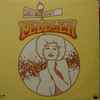
Another mid-1970s release that seems to have slipped below the waves without a trace ... Good luck finding a review on this one.
Peddler hailed from Indianapolis and featured the talents of bassist Bo Gooliak, drummer Russell Taylor, and guitarist... See full review |
|
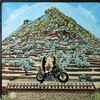
Like their debut album, 1972's "Benediction" was produced by Andrew Loog Oldham. Keyboardist Richard Kosinski and bassist Ron Aitken again provided virtually all of the material. The exception was a radically reworked cover of The Four Tops' 'Reach...
See full review
|
|
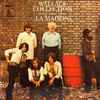
They're completely unknown in the States and this 1970 soundtrack album is too obscure to even qualify as obscure in the US.
Given their prior commercial successes it was only a matter of time before The Wallace Collection were approached to work on... See full review |
|
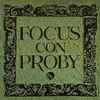
Released in the midst of the full onslaught of punk aggression and new wave angst, 1978's "Focus Con Proby" never stood a chance in the commercial arena. Adding to Focus' problems, the album was released in the wake of wholesale personnel changes...
See full review
|
|
I'll have to admit that my knowledge of South African music is largely limited to the likes of Johnny Clegg and Ladysmith Black Mombasa. I was more than willing to explore South African rock, but Julian Laxton was an unknown entity to me. Turns out...
See full review
|
|
So here's an obscurity that I know was written and released as a tax scam album. How do I know that for certain ? Well, namesake Larry Rust told me so.
"If I remember right, [producer] Frank [Cook] was hooked up with some Beverly Hills accountant... See full review |
|
|
As the front woman for the groundbreaking, all women band Fanny, I would have expected June Millington's solo catalog to have attracted waves of attention. That certainly wasn't the case with her second solo release - 1983's "Running". Good luck...
See full review
|
|
I'm always amazed at how many English bands recorded albums in the mid-'70s. Even more of a surprise is how many seem to have slipped by with little, or no attention; to say how many of them I've never heard of. Add to that list of unknown is the...
See full review
|
|
One of the final releases on Morris Levy's infamous Tiger Lily tax scam label, "Brother Bait" was interesting for a number of reasons. Showcasing the talents of lead guitarist Ron Bloom, keyboardist Maurice David Crutcher, drummer Christopher "Rudy"...
See full review
|
|
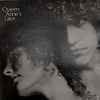
When I first heard this album I could have sworn I was listening to The Free Design ... so your own opinion on this collection is likely to be influenced by how you feel about the Dedrick siblings.
Like the liner notes say "Queen Anne's Lace combines... See full review |
|
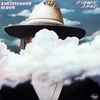
On the heals of three albums with songwriting partner Bobby Hart, 1973 saw singer/guitarist Tommy Boyce form Christopher Cloud. Recruiting bassist Patrick O'Connor, lead guitarist Michael Overly and drummer Bugs Pemberton, the quartet were signed by...
See full review
|
|
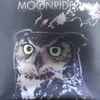
If you were ever looking for a example of a "journeymen" 1970s rock band, you need look no further than the short-lived Moonrider. Formed in 1974, the band featured drummer Brian Greenwood, bassist Bruce Thomas, singer/rhythm guitarist Keith West and...
See full review
|
|
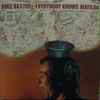
So here's a guy who's lived under a wide number of alias - Duke Baxter, Dudley Ford Baxter, James Blake, and Jim Shaman.
Even though the title of his debut album left me with the impression he was Australian, Baxter was apparently born in the UK,... See full review |
|
Let me warn you this was about as far from Procol Harum as imaginable. It's also hard to believe this guy was born and raised in London - planning on becoming a soccer star until he shattered his arm. Well, why not become a drummer?
Best known... See full review |
|
|
|
|
Snafu evolved out of 1973 recording sessions for what was planned to be former Procol Harum and Freedom singer/drummer Bobby Harrison's debut album. One of the musicians playing on the recording sessions was Juicy Lucy guitarist Mickey Moody. ...
See full review
|
|
Produced by Steve Rowland, 1974's "Situation Normal" shouldn't be a surprise to anyone who heard the debut SNAFU album. And if you liked the debut, chances are you were going to like the sophomore release. Powered by Bobby Harrison's instantly...
See full review
|
|
This one was a total unknown to me. It attracted my attention for one reason; namely it was released on Jeff Kasenetz and Jerry Katz's Magna Glide label and is quite rate (it doesn't appear in any on-line discography I've seen).
Assuming they were... See full review |
|
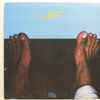
I've spent a couple of hours trying to dig out some information on Spencer Barefoot. I know the guy's name was actual Spencer Tracy and after singing in some mid-'69s New Jersey bands, he attracted the attention of songwriter/producer Kenny Luguna...
See full review
|
|
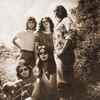
Known as This Oneness, the Minneapolis, Minnesota based band featured a line-up of vocalist/guitarist Gregg Inhofer, keyboard/woodwind player Robyn Lee, bassist Douglas Nelson , drummer Bernard Pershey and guitarist Dale Strength. Inhoffer and...
See full review
|
|
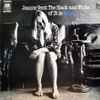
There just doesn't seem to be a great deal of online biographical information on the late Joanne Vent. She seems to have started out as a backup singer, somehow getting signed to a solo contract with A&M. Unfortunately Paul Jay Robbins' flowery...
See full review
|
|
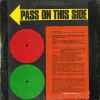
Former Godz drummer Paul Thornton may have gotten first place in the naming department and was responsible for penning four of the album's eight selections, but 1974's "Pass On the Side" was largely built on the talents of...
See full review
|
|
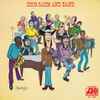
Was 1973's "Doug Sahm and Band" my favorite Doug Sahm album ? Nah, there were way too many country influence scattered across the twelve selections for my tastes. At the same time, the album included a couple of Sahm career classics. Co--produced...
See full review
|

|
Wow, here's a strange one even for a tax scam label like Morris Levy's Tiger Lily Records. Richard Grasso's roots were in early-1960s Philadelphia doo-wop. The few on-line references I've stumbled across indicate he recorded with Philly-based ...
See full review
|
|
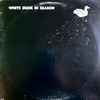
After the release of the first White Duck album front men/brothers Lanny and Rick Fiel left White Duck. Bassist Mario Friedel, keyboard player Don Kloetzke and drummer Paul Tabet elected to continue the nameplate recruiting a young John Hiatt (then...
See full review
|
|
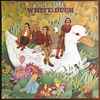
I bought this album for two reasons - Sharleen Pederson's cool cover art and the fact the LP was produced by Buzz Cason.
For a band that recorded on a major label, there isn't a great deal of bibliographic information to be found on them. What is... See full review |
|
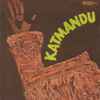
Is "Katmandu" the best release of the Mainstream label ? Nope. Is it as bad as most reviewers would have you believe ? Nope. So here's what I consider to be the real scoop on this one.
Not to be confused with the short-lived early 1990s hair... See full review |
|
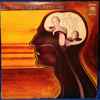
Their third studio album ,1969's self-produced "It's All Happening On the Inside" was the first album to be less than overwhelming. A mixture of original material, and a couple of covers, to my ears it sounded as if Boyce and Hart had begun to run...
See full review
|
|
Given the prices original copies of this album fetch (looking at the Popsike website I see sales between $300 and $700), there was no chance I would ever own a copy of the album. That said, in 2014 the Illinois-based Lion Productions label released...
See full review
|
|
|
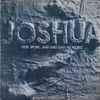
Turns out Joshua is a pretty popular name for bands. The Rate Your Music database shows at least eight outfits. Discogs has even more.
Normally a blatantly Christian rock album wouldn't be something I had a lot of interest in, but over the years... See full review |
|
1969 found keyboardist Peter Solley and drummer Kevin Webb touring the world with Terry Reid as he opened for The Rolling Stones. Great opportunity you would think? Well Solley and Webb decided there had to be better things to do and after a show in...
See full review
|
|
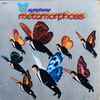
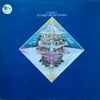
In 1970 Thomas Bacon, Robert Cowart, Donald Haas, Arthur Krehbiel, Ervin Monroe, Robert Pangborn, Dennis Smith and Sam Tundo were all members of The Detroit Symphony Orchestra. The eight were apparently all bitten by the rock and roll bug, deciding to...
See full review
|
|
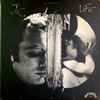
After a three year hiatus bassist Andy Hellaby, singer/multi-instrumentalist Bobbie Watson and lead guitarist Roger Wootton unexpected reunited Comus. With the addition of new drummer Gordon Coxon and keyboardist Keith Hale the band released 1974's...
See full review
|
|
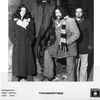
As an avid vinyl collector, the late Jimmy Curtiss is one of those names I've regularly come across in association with different groups including The Bag, The Jon Bartle Group, The Hobbits, Velvet Night, etc.. He's also one of those rock enigmas -...
See full review
|
|
I've always been amazed at how many great (and often unknown) bands spring from Minnesota. Must have something to do with the long, cold winters that force folks into indoor activities ... That said, this is an album where the isolated reviews I'd...
See full review
|

|
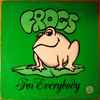
Maybe not a great album, but as one of the first used LPs I ever bought, this one holds a special place in my collecting heart.
The Hobbits (and the New Hobbits) were the brainchild of the late Jimmy Curtiss (aka James Stulberger). Born and raised... See full review |
|
Singer/guitarist Freddy Toscano's was a member of the Long Island based trio The Forth Dimension. The group recorded a pair of obscure pop 45s for Columbia before morphing into the six piece psych band Mr. Flood's Party. Signed by Atlantic's newly...
See full review
|
|
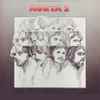
In the wake of marginal sales of their debut album and a disastorous showcase performance at New York's Fillmore East, Aorta was dropped by Columbia Records. Drummer Billy Harman and bassist Bobby Jones quickly left. Jim Donlinger and Jim Nyeholt ...
See full review
|
|
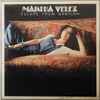
Here's a perfect example of an interesting concept which unfortunately went terribly astray ...
At least in theory, 1975's "Escape from Babylon" should have made for one very interesting album. Singer Martha Velez had already recorded a couple of... See full review |
|
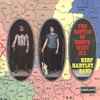
The debut LP offered up a decent enough slice of blues-rock and to be truthful, I wasn't expecting much more from 1969's "The Battle of North West Six". Judging by the liner notes and performance credits (former lead guitarist Spit Jones showed up on...
See full review
|
|
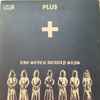
Hum ... This is easily one of the odder major label efforts I've stumbled across.
As Plus, brothers Mike (drums) and Tony (guitar) Newman and bassist Max Simms found an impressive mentor in the form of ex-Yardbirds bassist/producer Simon... See full review |
|
Not to be confused with the Ohio-based One St. Steven, this Boston, Massachusetts-based outfit was one of those mystery acts nobody seemed to know all that much about. While some references refer to it as a band, 1969's "Over the Hills" was actually...
See full review
|
|
So here's another one that would have been all but forgotten, were it not to Austrian record collector Hans Pokora who included it in one of his Record Collector Dreams books. A lost progressive classic from Nebraska? We'll I'll admit I was...
See full review
|
|
This one was a complete mystery to me. I readily admit I bought if for the odd title and the fact it was released by Playboy Records. I found a couple of brief on-line reviews, but naturally they were both in Japanese so they didn't do me much good....
See full review
|
|
I stumbled across a copy of this album at a summer yard sale. Neither the cover (typical wannabe cool band photo), nor the record label (Casablanca) did much for me. Still, looking at the liner notes, Giants storied line-up was enough for me to...
See full review
|